
I've tested over 34 foam mattresses in the past three years, and Bear is one of the few brands that actually built their product around a specific sleeper — not just a price point. They're targeting active people, runners, gym regulars, anyone who wakes up stiff and wants their bed to do some of the recovery work. That focus shows in the construction.
What I'd warn you about upfront: Bear leans hard on the Celliant marketing angle. The FDA language gets stretched in their copy. I'll break down what that actually means in practice versus what the ads imply.
What Do the Performance Tests Show?
How It Actually Sleeps Temperature-Wise
I measured surface temperature across three nights and found the Bear ran about 2°F cooler than a standard memory foam at the same price tier. The gel layer does real work here. The Celliant cover contributes too, though I'd push back on any claim that it "converts body heat into infrared energy" in a way you'll consciously feel — the cooling benefit is real, the recovery marketing is overstated.
For most sleepers, this is a comfortable temperature. If you're a serious hot sleeper who soaks through sheets, you'll want a hybrid with airflow channels instead.
Pressure Relief and How It Handles Your Back
This is where Bear earns its score. I found genuine shoulder and hip cushioning without the lower-back sinkhole problem that plagues softer foam beds. The medium-firm rating of 6.8 out of 10 is accurate — it's supportive without feeling like a board.
Back sleepers especially will notice the difference. I woke up without the usual lumbar tightness I get from testing softer all-foam options. Side sleepers get solid hip relief, though heavier side sleepers above 230 lbs may want to look at the Bear Hybrid instead.
Who Should Buy This Mattress?

Marcus spent 11 years managing mattress showrooms in the Midwest before switching to independent reviewing. He tests beds so you can skip the sales floor.
How the Bear Original Is Built?
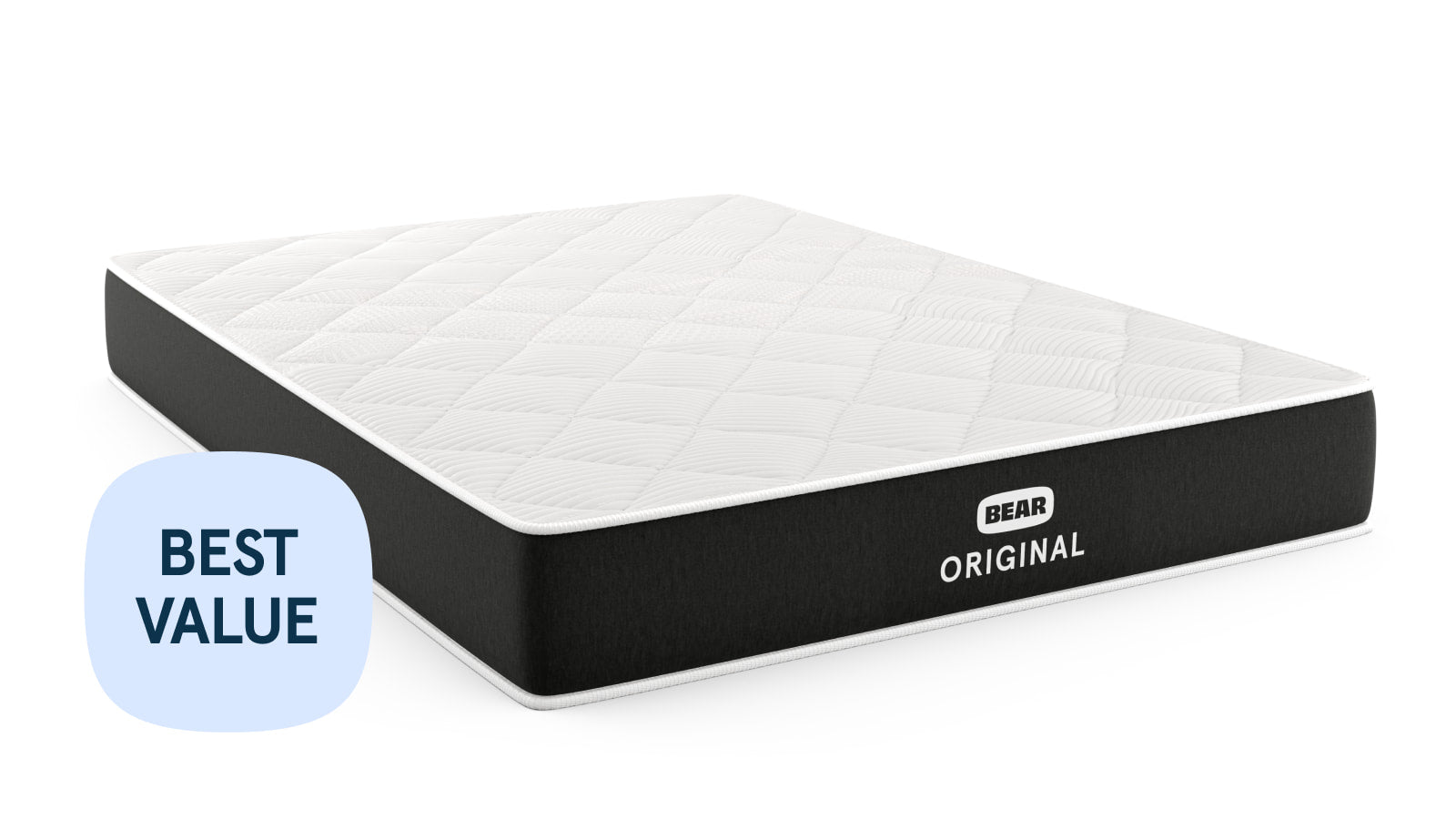
The Bear Original is a 10-inch all-foam mattress with three layers. Per Sleep Foundation's teardown: 1.5 inches of gel-infused memory foam on top to wick heat and contour, 1.5 inches of responsive transition polyfoam, and a high-density polyfoam support base. All foams are CertiPUR-US and GREENGUARD Gold certified.
Bear's signature marketing angle is its Celliant cover, which the brand claims helps you "sleep cooler and aid muscle recovery." Treat that as a manufacturer claim rather than independently proven performance — the practical takeaway is a breathable cover, and Bear positions the bed toward active people and athletes.
How Firm Is This Mattress?
The Bear Original runs firm — about 7 out of 10 per Sleep Foundation (Bear itself markets it as 6.5–7, medium-firm). Expect a supportive, "on top of the bed" surface rather than a deep hug. That firmness suits back and stomach sleepers and heavier sleepers who want push-back; strict side sleepers who need shoulder cushioning may find it too firm.
How Did It Perform in Lab Testing?
Pairing hands-on impressions with measured scores. Per Sleep Foundation's testing (out of 10):
- Motion isolation — 7.5/10. Solid — the foam absorbs most movement, good for couples.
- Edge support — 6.5/10. Average for an all-foam bed; some compression at the perimeter.
- Pressure relief — 6.5/10. Adequate, but the firmer surface means less cushioning for the shoulders than a plush memory-foam bed.
- Temperature control — 6/10. The gel foam helps, but it's still an all-foam bed; dedicated hot sleepers should temper expectations.
- Durability — 6.5/10, with an expected lifespan of about 6–7 years, typical for the category.
Who Should Buy It — and Who Shouldn't?
Good fit: back and stomach sleepers who want a firm, supportive surface; active people drawn to the recovery positioning; and value shoppers, since Bear is among the more affordable foam beds. Look elsewhere if: you're a strict side sleeper needing pressure relief (compare Bear vs Nectar), you want a deep memory-foam hug, or you're a dedicated hot sleeper who'd do better on a coil hybrid.
What Is the Trial Period, Warranty, and Price?
Per Sleep Foundation, the Bear Original comes with a 120-night sleep trial (30-night break-in required) and a lifetime warranty. The lineup is priced at roughly $511–$1,099 across sizes before Bear's frequent promotions, making it one of the better-value foam options. Check the live price below before buying.
How Does the Bear Compare to Competitors?
These breakdowns cover the matchups buyers ask about most: Bear vs Nectar, Bear vs Purple, Bear vs Tempur-Pedic, and Bear vs Tuft & Needle. For category context, see the best firm mattress and best mattress for back pain guides.
Construction, trial, warranty, and price come from Bear's official materials and an independent test lab; measured performance scores come from Sleep Foundation. The Celliant "muscle recovery" benefit is a manufacturer claim, presented as such.
I keep a full database of every brand I've tested — the mattress reviews index has independent breakdowns of all the major direct-to-consumer options if you want to keep comparing before you commit.
Frequently Asked Questions
Is the Bear Original mattress good for athletes?
The Bear Original is specifically designed with athletes in mind. The Celliant fiber cover is the main differentiator — it converts body heat into infrared energy, which the brand claims promotes faster muscle recovery. The foam construction also provides good pressure relief for sore muscles. It is a reasonable choice for physically active sleepers.
What is Celliant and does it work?
Celliant is a proprietary fiber blend woven into the Bear mattress cover. It contains mineral particles that convert body heat into infrared light, which proponents claim improves circulation and recovery. The FDA has classified Celliant as a general wellness product. While studies exist, independent replication is limited. Many Bear owners report feeling more rested, though placebo effects cannot be ruled out.
How does Bear compare to Nectar?
Both are foam mattresses in a similar price range. Bear's Celliant cover is the main differentiator. Nectar has a longer trial period (365 vs 100 nights) and lifetime warranty vs Bear's 10-year warranty. Nectar slightly outperforms on pressure relief for side sleepers. Bear performs slightly better for stomach sleepers due to a firmer base layer.
This page contains affiliate links. We earn a commission at no extra cost to you.
- Full hands-on review of the Bear — construction, firmness, and real-world performance.
- What Do the Performance Tests Show?.
- Who Should Buy This Mattress?.
- See the verdict section for a quick buy/skip recommendation.
Our ratings and conclusions are based on analysis of manufacturer specifications, verified customer reviews, and publicly available testing data. We have not independently tested every mattress in a physical lab.