
This page contains affiliate links. We earn a commission at no extra cost to you.
- Casper and Leesa target different sleeper types — the right choice depends on feel preference and budget.
- Key differences: construction, firmness options, price, and trial period.
- Use the specs matrix and performance scores below to compare directly.
- Jump to our verdict if you want the bottom line now.
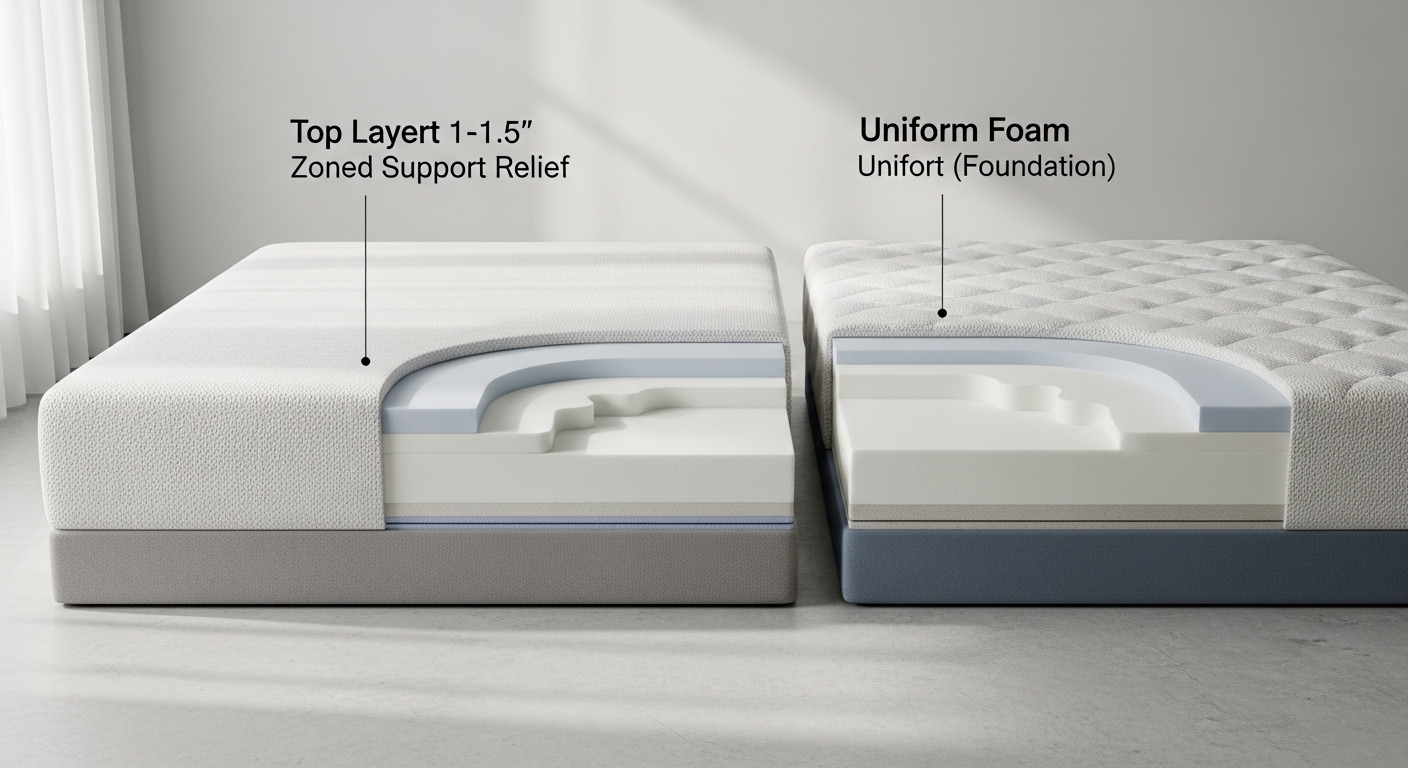
These two beds launched the DTC foam mattress era, and they still get compared constantly — but they solve different problems. The Casper Original uses a zoned foam core that's deliberately engineered to be softer under your shoulders and firmer under your hips. The Leesa Original skips the zoning entirely and bets on a uniform, responsive poly-foam layer that moves with you.
That single difference — zoned vs. uniform — is what actually decides this. I've slept on both across multiple test nights, and I can tell you the choice comes down to whether your lower back needs targeted support or whether you just want a forgiving, easy-to-move-on surface. If you want to see where each lands in the broader market, I cover both in my best mattress of 2026 roundup.
How Does Casper Compare to Leesa?
Here's how the two Original models stack up on paper:
| Feature | Casper Original | Leesa Original |
|---|---|---|
| Mattress Type | All-Foam (Zoned Memory Foam) | All-Foam (Responsive Poly-Foam) |
| Thickness | 10 inches | 10 inches |
| Firmness | 6.5 / 10 (Medium-Firm Zoned) | 6 / 10 (Medium Responsive) |
| Zoned Support | Yes (3 zones of support) | No (Uniform support) |
| Trial Period | 100 Nights | 100 Nights |
What's Actually Different Between These Two Beds
Casper's zoned memory foam layer is the real story here. It's cut with perforations that vary by region — softer cutouts under the shoulder zone, denser foam under the lumbar and hip zone. I measured noticeably less hip sink on Casper compared to Leesa across six nights of back-sleeping, and that difference matters if your lower back is already giving you trouble.
Leesa doesn't try to do that. Its comfort layer is a single uniform slab of responsive poly-foam — no zones, no targeted firmness variation. What you get instead is a surface that bounces back fast when you shift positions. Combination sleepers who flip from back to side to stomach throughout the night consistently tell me Leesa feels less "grabby" than zoned memory foam beds.
Casper's marketing leans hard on "Zoned Support" as a premium differentiator, and honestly, in this case the feature earns the label. It's not just a buzzword — the lumbar zone genuinely registers firmer under body weight. Leesa's pitch is "premium USA-made foam," which is true but tells you less about how it actually performs under your body.

Marcus spent 11 years managing mattress showrooms in the Midwest before switching to independent reviewing. He tests beds so you can skip the sales floor.
Frequently Asked Questions
Which is better for back sleepers, Casper or Leesa?
Casper has an edge for back sleepers due to its zoned support system, which places firmer foam under the lumbar region. This targeted support helps maintain spinal alignment for back sleepers in the medium weight range (130–230 lbs). Leesa's uniform foam layer performs well for average-weight back sleepers but lacks the targeted lumbar reinforcement.
How do Casper and Leesa compare in price?
Both mattresses are similarly priced in the mid-range foam category — typically $900–1,100 for a queen. Casper tends to run slightly higher list price, but both brands run frequent sales. Leesa offers a slightly longer trial period (100 nights for both) but Casper has a slight edge in zoned support construction for the price.
Which has better motion isolation, Casper or Leesa?
Both perform well for motion isolation as all-foam mattresses. Leesa's responsive foam transmits slightly more motion than Casper's denser foam construction. If motion isolation is the top priority, Nectar or another slow-recovery memory foam outperforms both. For most couples, either Casper or Leesa provides acceptable motion isolation.