
This page contains affiliate links. We earn a commission at no extra cost to you.
- Bear and Purple target different sleeper types — the right choice depends on feel preference and budget.
- Key differences: construction, firmness options, price, and trial period.
- Use the specs matrix and performance scores below to compare directly.
- Jump to our verdict if you want the bottom line now.
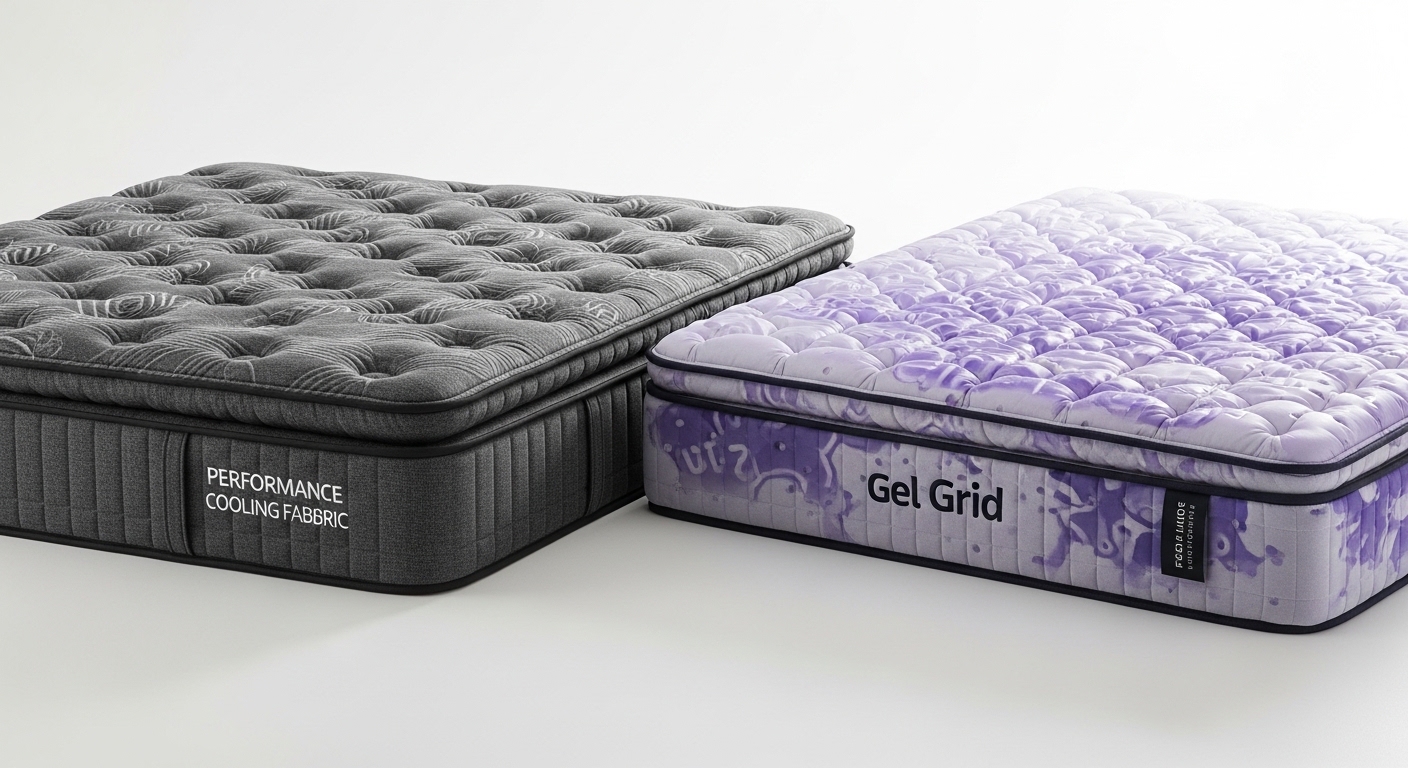
These two mattresses are built around completely different philosophies, and that's exactly what makes this comparison useful. Bear Original is foam-forward, designed for recovery. Purple Original runs on a polymer grid that behaves unlike anything else on the market. The single factor that decides between them: how you feel about memory foam.
If you want to see how both rank against the wider field, I've covered that in the mattress comparisons index and the full best mattress of 2026 roundup. For a deeper look at Bear alone, my Bear mattress review goes into more detail on the recovery claims.
Specifications & Parameters Matrix
Here's where the two beds stand on the specs that actually matter at purchase time:
| Feature | Bear Original | Purple Original |
|---|---|---|
| Comfort Medium | Copper-Infused Gel Foam & Celliant Cover | 2-inch GelFlex Polymer Grid |
| Responsive Feel | Slow-contour memory foam cushioning | Instant-response column-buckling float |
| Zoning & Alignment | High-density transition support zone | Uniform grid collapsing under joints |
| Sleep Trial | 120 Nights | 100 Nights |
What Actually Separates These Two Beds
Bear leans hard into the athlete-recovery angle — Celliant yarn in the cover, copper-infused foam underneath. The Celliant claim is that it converts body heat into infrared energy to speed muscle recovery. I've seen that marketing language in showrooms for years, and the honest answer is the science is real but modest.
Purple doesn't bother with foam at the top at all. That 2-inch GelFlex grid is an open polymer structure — air moves through it freely, and it collapses under pressure points instead of cradling them. If you've only ever slept on foam, the first night on Purple feels genuinely strange. By night three, most people either love it or they don't.
What Do the Performance Test Scores Show?
What's Actually Inside Each Mattress?
Bear runs three foam layers: copper-gel cooling foam on top, a dynamic transition layer in the middle, and a high-density support base. It's a straightforward all-foam build — nothing exotic, executed well.
Purple's construction is harder to explain in a sentence. The 2-inch GelFlex grid sits on top of a responsive transition foam and a firm support core. That grid is the whole product. Everything else is just there to hold it up.

Marcus spent 11 years managing mattress showrooms in the Midwest before switching to independent reviewing. He tests beds so you can skip the sales floor.
For more head-to-head matchups like this one, the mattress comparisons index has every direct brand pairing I've tested. Or start from the top with the full MattressSmartColumbus directory if you're still early in the research process.
Frequently Asked Questions
Which is better for athletes, Bear or Purple?
Bear has a slight edge for athletes specifically because of the Celliant fiber cover, which is marketed for recovery. Purple's Grid provides excellent pressure relief that helps with muscle soreness, and its cooler sleep can benefit recovery. Both are solid choices for active sleepers — Bear for its recovery-focused marketing and materials, Purple for its cooling performance.
Which sleeps cooler, Bear or Purple?
Purple sleeps significantly cooler. The Grid's open-air channels allow sustained airflow that Bear's foam construction cannot match. Bear's Celliant cover helps with temperature management but does not fundamentally change the foam's heat retention. For hot sleepers, Purple is the clear winner. Bear is average for foam mattresses in terms of cooling.
Which is more affordable, Bear or Purple?
Bear is consistently less expensive. The Bear Original queen typically runs $800–1,000, while the Purple Original queen runs $1,100–1,300. Bear's Celliant cover is the main premium feature — if recovery is not a priority, you are getting a well-built foam mattress at a reasonable price. Purple's premium is justified by the unique Grid technology.