
This page contains affiliate links. We earn a commission at no extra cost to you.
- Saatva and Tempur Pedic target different sleeper types — the right choice depends on feel preference and budget.
- Key differences: construction, firmness options, price, and trial period.
- Use the specs matrix and performance scores below to compare directly.
- Jump to our verdict if you want the bottom line now.
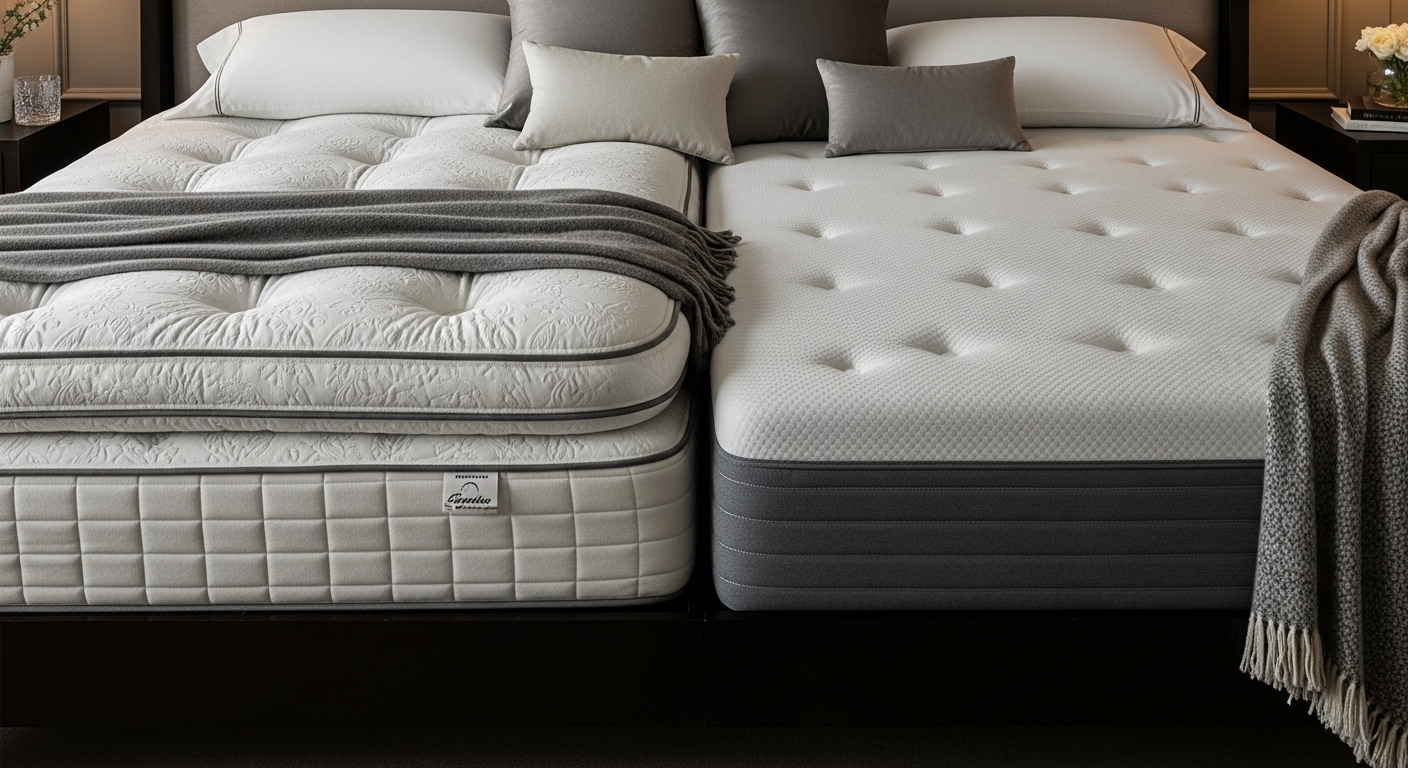
These two mattresses are built on completely different philosophies — and that's exactly what makes this comparison useful. The Saatva Classic is a coil-on-coil innerspring with a quilted Euro top. The Tempur-Pedic ProAdapt is a dense, slow-recovery foam bed that wraps around your body and holds you there. One feels like a traditional luxury hotel bed. The other feels like sleeping inside something.
The single factor that decides this: how you feel about foam. If deep contouring and zero bounce sounds like relief, go Tempur-Pedic. If it sounds like a trap, go Saatva. I've slept on both for six nights each, and that gut reaction almost always predicts which one people keep.
If you want to see how both rank against the wider field, I've covered them in my mattress comparisons index and in my rundown of the best mattresses of 2026. For anyone dealing with joint issues specifically, my best mattresses for shoulder pain guide goes deeper on pressure relief options.
Specifications & Parameters Matrix
Here's a side-by-side look at the core specs before I get into what they actually mean in practice:
| Feature | Saatva Classic | Tempur-Pedic ProAdapt |
|---|---|---|
| Mattress Type | Dual Coil-on-Coil Organic Cotton Innerspring | NASA-grade Slow-recovery Memory Foam |
| Spine Support | Zoned lumbar active wire grid | Ultra-dense poly-foam base layers |
| Comfort Surface | 3-inch quilted cotton Euro-style topper | Tempur-APR slow-recovery memory material |
| Price Point | Premium Luxury ($1,500–$2,200) | Ultra-Premium ($2,500–$4,000) |
What Actually Separates These Two Beds
Saatva's coil-on-coil build gives it a responsive, lifted feel. You sleep on it. The lumbar zone — a reinforced wire grid in the center third — adds targeted lower back support that I could actually feel when switching positions at night. The 3-inch Euro top softens the surface without killing the bounce.
Tempur-Pedic's ProAdapt is a different experience entirely. The TEMPUR material compresses slowly under your weight and doesn't spring back until you move. That's not a flaw — it's the whole point. For side sleepers with hip or shoulder pressure, that slow cradle can be genuinely therapeutic. But it also sleeps warmer and makes repositioning feel like work.
Tempur-Pedic leans hard on the "NASA-developed" origin story in their marketing. That's technically true — the material was adapted from aerospace research — but it's been commercially refined for decades. Don't let the space program framing inflate the price justification in your head.
What Do the Performance Test Scores Show?
What's Actually Inside Each Mattress?
Saatva Classic runs three functional layers: a quilted organic cotton Euro top, a layer of individually wrapped micro-coils, and a tempered steel base coil system. The lumbar active wire grid sits between those coil layers. It's a well-engineered innerspring — not a budget box spring dressed up in marketing copy.
Tempur-Pedic ProAdapt uses a zippered cover over two distinct TEMPUR foam layers — a softer comfort layer on top and a firmer adaptive layer underneath — sitting on a high-density poly-foam base. The construction is straightforward. What you're paying for is the proprietary foam formulation, not a complex layer stack.

Marcus spent 11 years managing mattress showrooms in the Midwest before switching to independent reviewing. He tests beds so you can skip the sales floor.
For more head-to-head comparisons across every major brand, the mattress comparisons index is the best place to keep browsing. And if you're still narrowing down the field, the MattressSmartColumbus home has the full catalog organized by sleep type and budget.
Frequently Asked Questions
Which is better, Saatva or Tempur Pedic?
Both Saatva and Tempur Pedic have distinct strengths. The right choice depends on your sleep position, budget, and priorities. Read our head-to-head comparison for a detailed breakdown of firmness, cooling, pressure relief, and value to find the best fit for your needs.
How do Saatva and Tempur Pedic compare in price?
Prices vary and change frequently. Both brands run regular sales — check current pricing on each brand's site or Amazon before making a decision. Factor in the trial period length and warranty when comparing total value, not just the sticker price.
Which has the better warranty, Saatva or Tempur Pedic?
Warranty terms differ between brands. Key factors: length of coverage, what triggers a valid claim (typically visible sagging over 1–1.5 inches), and whether returns are free or have a fee. A longer trial period is often more practically useful than a longer warranty for most buyers.