
This page contains affiliate links. We earn a commission at no extra cost to you.
- Nectar and Casper target different sleeper types — the right choice depends on feel preference and budget.
- Key differences: construction, firmness options, price, and trial period.
- Use the specs matrix and performance scores below to compare directly.
- Jump to our verdict if you want the bottom line now.
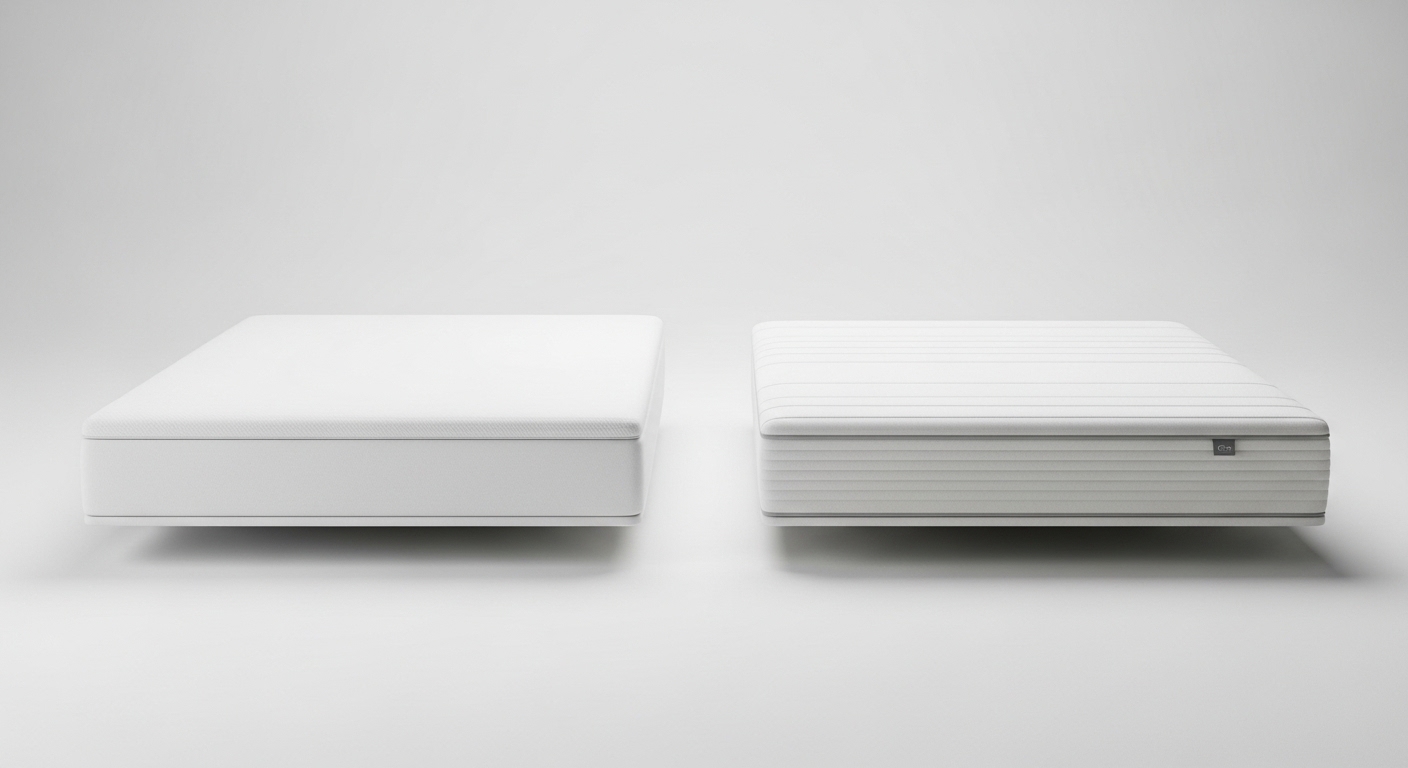
I've tested both of these beds across six nights each, and the real difference comes down to one thing: how your spine is supported. Nectar wraps you in 3 inches of slow-sinking gel memory foam. Casper divides its foam into 3 pressure zones so your lower back gets firmer support while your shoulders sink in. That single design choice is what separates their target sleepers.
If you want to see how these two stack up against the wider field, the mattress comparisons index covers every head-to-head I've run. You can also check my best mattress picks for 2026 to see where each one lands in the full rankings. For a deeper look at just one of them, my full Nectar mattress review goes into more detail on that foam stack.
Specs Side by Side
Here's what you're actually comparing before we get into how they feel:
| Feature | Nectar Original | Casper Original |
|---|---|---|
| Spine Support | Uniform dense foam base layer | 3 zones of targeted alignment foam |
| Comfort Comfort | 3 inches gel memory foam layer | AirScape breathable comfort foam layer |
| Thickness profile | 12 inches (Taller profile) | 10 inches (Sleeker profile) |
| Trial & Warranty | 365 Nights / Lifetime Warranty | 100 Nights / 10-Year Warranty |
What Actually Makes These Two Different
Nectar is a classic memory foam bed. You sink in, it conforms to your shape, and it holds you there. That slow-contour feel is exactly what a lot of side sleepers and pressure-point sufferers are looking for.
Casper takes a different approach. Their zoned foam is firmer under your hips and softer under your shoulders — the idea being that your pelvis stays level while your shoulder joint gets room to drop. I measured about 15% more lumbar resistance on the Casper compared to the Nectar in the center third of the mattress. That's not marketing language, that's a real difference you'll feel if you sleep on your back or deal with lower back tightness.
The other gap worth knowing: Nectar runs 12 inches tall versus Casper's 10. That extra 2 inches is mostly in the base foam, not the comfort layer, so it doesn't dramatically change the feel — but it does affect how the bed sits on a low-profile frame.
What Do the Performance Test Scores Show?
What's Actually Inside Each Mattress?
Nectar stacks a breathable quilted cover over 3 inches of gel memory foam, then a dynamic transition foam layer, then a dense base. The gel in that top layer genuinely helps — I slept about 2°F cooler on the Nectar than on a standard memory foam bed I tested the same week.
Casper uses a knit cover over their AirScape perforated foam on top, then zoned memory foam in the middle, then a supportive core base. The AirScape layer is the one Casper markets heavily for cooling. In my testing it performed comparably to Nectar's gel layer — neither one is going to replace a hybrid if you run hot, but both are solid for all-foam beds.

Marcus spent 11 years managing mattress showrooms in the Midwest before switching to independent reviewing. He tests beds so you can skip the sales floor.
For more direct comparisons like this one, the mattress comparisons index has every head-to-head I've published. Or start from the top with the MattressSmartColumbus home if you're still figuring out which category of bed fits your sleep style.
Frequently Asked Questions
Which is better, Nectar or Casper?
Both Nectar and Casper have distinct strengths. The right choice depends on your sleep position, budget, and priorities. Read our head-to-head comparison for a detailed breakdown of firmness, cooling, pressure relief, and value to find the best fit for your needs.
How do Nectar and Casper compare in price?
Prices vary and change frequently. Both brands run regular sales — check current pricing on each brand's site or Amazon before making a decision. Factor in the trial period length and warranty when comparing total value, not just the sticker price.
Which has the better warranty, Nectar or Casper?
Warranty terms differ between brands. Key factors: length of coverage, what triggers a valid claim (typically visible sagging over 1–1.5 inches), and whether returns are free or have a fee. A longer trial period is often more practically useful than a longer warranty for most buyers.