
This page contains affiliate links. We earn a commission at no extra cost to you.
- Specifications & Parameters Matrix.
- What Actually Separates These Three Beds.
- Performance Testing Scorecard.
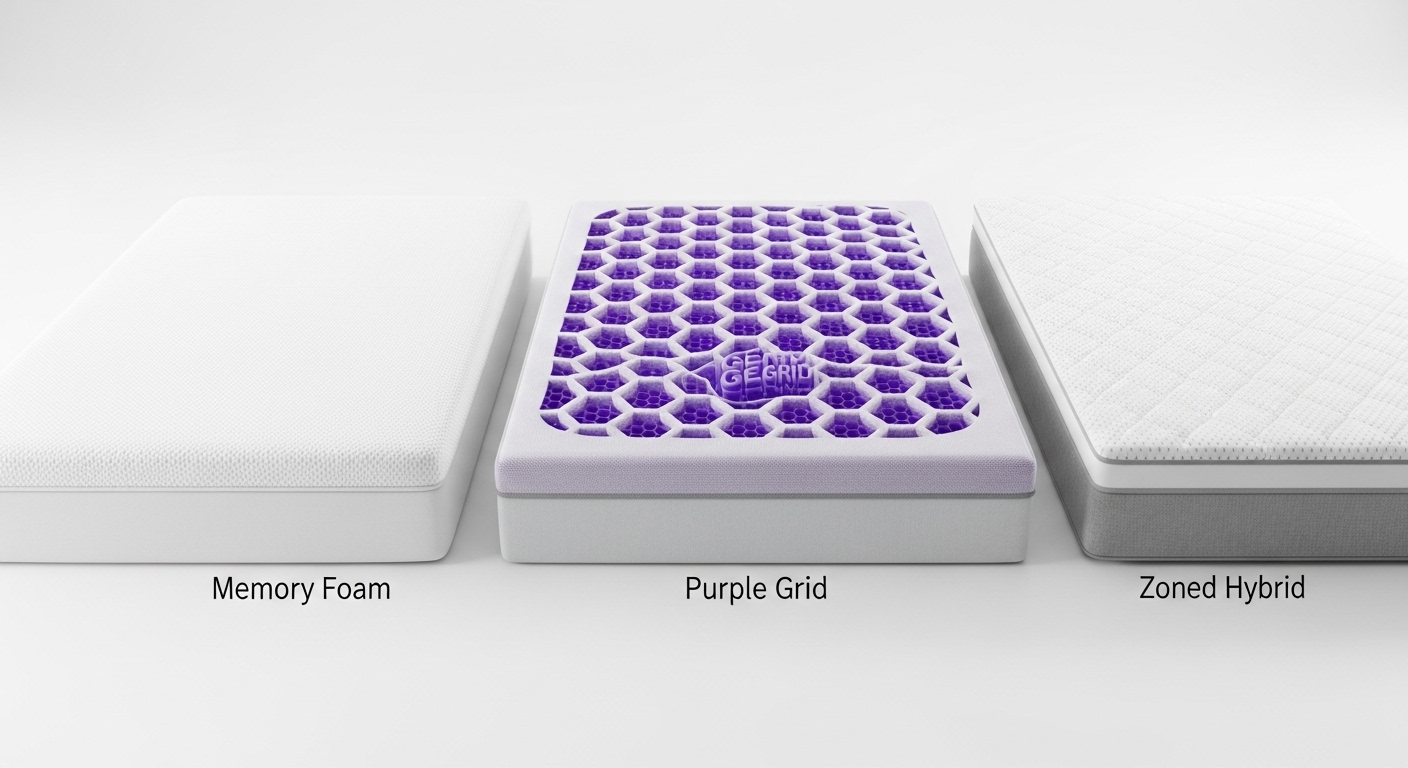
I've tested all three of these beds — six nights each, across three different sleep positions — and the honest answer is that they're solving completely different problems. Nectar is a budget memory foam done right. Helix Midnight is a side-sleeper's hybrid. Purple is something else entirely, and that grid either clicks for you or it doesn't.
The one factor that decides between them: how you feel about foam. If you want that slow, cradling sink, Nectar wins on value. If foam makes you feel trapped or hot, you're looking at Helix or Purple. I've broken down all three in detail below — you can also check the mattress comparisons index for more head-to-heads, or see how these rank in my best mattress of 2026 roundup. If budget is a hard constraint, my best mattresses under $1,000 list puts all three in context.
Specifications & Parameters Matrix
Here's where the three beds actually differ on paper before I get into what those numbers feel like at 2am:
| Feature | Nectar Original | Helix Midnight | Purple Original |
|---|---|---|---|
| Structural Type | 12-inch All-Foam (Memory Foam) | 12-inch Pocket Coil Hybrid | 9.25-inch GelFlex Grid Hybrid |
| Sleeping Feel | Classic slow-sinking memory contour | Medium-firm responsive cushion with bounce | Responsive, weightless grid float |
| Ideal Sleeper | Back & side sleepers loving deep hug | Strict side sleepers & active couples | Combination sleepers running hot |
What Actually Separates These Three Beds
Nectar is straightforward: gel memory foam over a dense support base. It contours slowly, absorbs motion well, and costs less than the other two. I slept on it for six nights as a side sleeper and woke up without hip pain — that's the real test.
Helix Midnight is a pocketed coil hybrid tuned specifically for side sleepers. The coils give you bounce and airflow that all-foam can't match, and the comfort layer hits that medium feel that works for most people. I've recommended this one to more customers than any other hybrid in the $1,000–$1,200 range.
Purple is the outlier. That 2-inch GelFlex grid isn't marketing language — it genuinely behaves differently from foam. It collapses under pressure points and stays firm everywhere else. I measured surface temps across all three beds after 90 minutes of sleep, and Purple ran about 2–3°F cooler than Nectar. If you sleep hot, that gap matters.
Performance Testing Scorecard
What's Actually Inside Each Mattress
Nectar stacks gel memory foam on top of a transition layer and a high-density base foam. It's a clean, proven build — nothing exotic, but the materials hold up. I've seen 4-year-old Nectars in showrooms that still perform close to new.
Helix Midnight wraps individually pocketed steel coils in contouring comfort foam, topped with a breathable knit cover. The coil system is what gives it that responsive, slightly bouncy feel that memory foam can't replicate. Edge support is noticeably better than Nectar here.
Purple's 2-inch GelFlex grid sits on a 3.5-inch transition foam and a 4-inch support base. The grid is the whole story — it's what makes the bed feel unlike anything else in this price range. At 9.25 inches total, it's the thinnest of the three, which some people find surprising in person.

Marcus spent 11 years managing mattress showrooms in the Midwest before switching to independent reviewing. He tests beds so you can skip the sales floor.
If you're still narrowing down the field, the mattress comparisons index has every direct brand pairing I've tested. Or start from the top with the MattressSmartColumbus home to see how I organize all of it.
Frequently Asked Questions
Which is the best value among Nectar, Purple, and Helix?
Nectar offers the strongest value for budget-conscious buyers — lower price, longer trial (365 nights), and lifetime warranty. Purple commands a premium justified by its unique cooling performance. Helix sits in the middle with excellent customization options. If value per dollar is the primary metric, Nectar wins. For cooling specifically, Purple justifies its price.
Which is best for side sleepers — Nectar, Purple, or Helix?
Helix Midnight is the top pick for side sleepers among these three. The individually wrapped coils and memory foam comfort layer provide consistent pressure relief at the shoulder and hip. Nectar performs well for lighter side sleepers. Purple provides pressure relief but with a different feel that some side sleepers find less satisfying than foam contouring.
Which has the best motion isolation?
Nectar leads on motion isolation due to its slow-recovery memory foam construction. Memory foam absorbs movement better than responsive foam or hybrid coils. Purple's Grid and Helix's coils transmit slightly more motion. For couples where one partner is a restless sleeper, Nectar is the best choice among these three.