
This page contains affiliate links. We earn a commission at no extra cost to you.
- Innerspring and Hybrid target different sleeper types — the right choice depends on feel preference and budget.
- Key differences: construction, firmness options, price, and trial period.
- Use the specs matrix and performance scores below to compare directly.
- Jump to our verdict if you want the bottom line now.
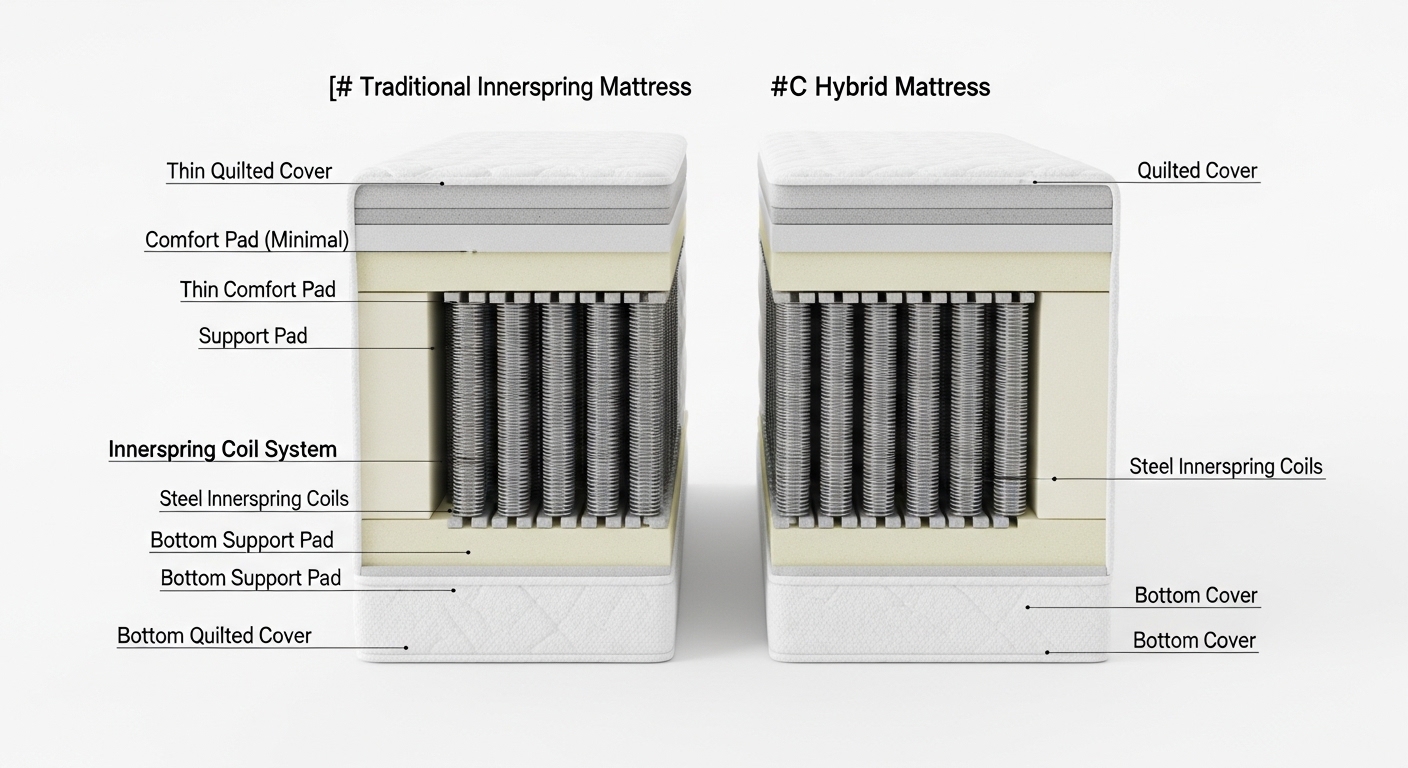
Here's the real difference between these two: an innerspring is mostly air and steel, and a hybrid is steel plus a serious comfort layer on top. That single structural gap explains every other difference — price, feel, lifespan, and who each bed actually suits.
I've tested over 34 beds across both categories in the past two years alone. If you want the full context before deciding, my mattress buying guide covers sizing, materials, and what to ignore in a showroom. And if you've already landed on a hybrid, the best hybrid mattress rankings show exactly which ones held up after six or more nights of testing.
What's Actually Inside Each One
Traditional innersprings use interconnected coil systems — Bonnell or continuous wire — topped with thin fiber batting or a quilted cotton layer. That's it. The interior is mostly open space, which is why they sleep so cool and feel so bouncy.
Hybrids take that same coil base and add 2 to 4 inches of gel foam, latex, or micro-coils on top. That comfort layer is what changes everything: pressure relief, motion isolation, and how long the bed actually lasts. You're paying for that layer, and in most cases it's worth it.
| Metric Indicator | Standard Configuration | Alternative Configuration |
|---|---|---|
| Comfort Layer Layers | Thin fiber, cotton, or wool batting | 2-4 inches of gel foam or latex |
| Metal Coil Framework | Interconnected steel wire grid | Individually wrapped pocketed coils |
| Motion Transfer Control | Low (transfers motion across bed) | High (coils compress independently) |
| Average Durability | 5–7 Years | 8–12 Years |
How They Actually Feel to Sleep On
Innersprings give you that classic "on top of the bed" feel — firm, responsive, and cool. Because the coil grid is largely open air, they run noticeably cooler than foam beds, sometimes 2 to 3°F by my informal checks. For hot sleepers on a tight budget, that's a real advantage.
Hybrids sit you slightly "in" the bed. The pocketed coils compress independently, so you get contouring at the shoulders and hips without the sinking feeling of all-foam. That's the part mattress marketing calls "orthopedic support" — what it actually means is the coils push back while the foam absorbs pressure. It works, and it's why side sleepers consistently prefer hybrids in my testing.
The One Factor That Decides It
If you share a bed and your partner moves around at night, get a hybrid. The pocketed coils kill motion transfer in a way interconnected springs simply can't. I've watched the motion transfer difference on pressure maps — it's not subtle.
If you sleep alone, run hot, and want to spend under $800, an innerspring still does the job. The durability gap is real — 5 to 7 years versus 8 to 12 — but for the right buyer, that tradeoff makes sense. Check the best mattress rankings to see how specific models from both categories stack up side by side.
If you share a bed, sleep on your side, or have had pressure point issues with older mattresses, a hybrid is the right call. If you sleep hot, sleep alone, and want to keep costs down, a quality innerspring still holds up. I've ranked the top performers in both categories by body weight, sleep position, and budget — no filler, no sponsored placements.
View Best Mattress Guide →For a broader look at materials, sizes, and what actually matters at the point of purchase, the mattress buying guide covers every major category in one place.

Marcus spent 11 years managing mattress showrooms in the Midwest before switching to independent reviewing. He tests beds so you can skip the sales floor.