
This page contains affiliate links. We earn a commission at no extra cost to you.
- Euro Top vs. Pillow Top: What's Actually Different.
- What's Actually Inside a Euro Top.
- Who Actually Benefits From a Euro Top.
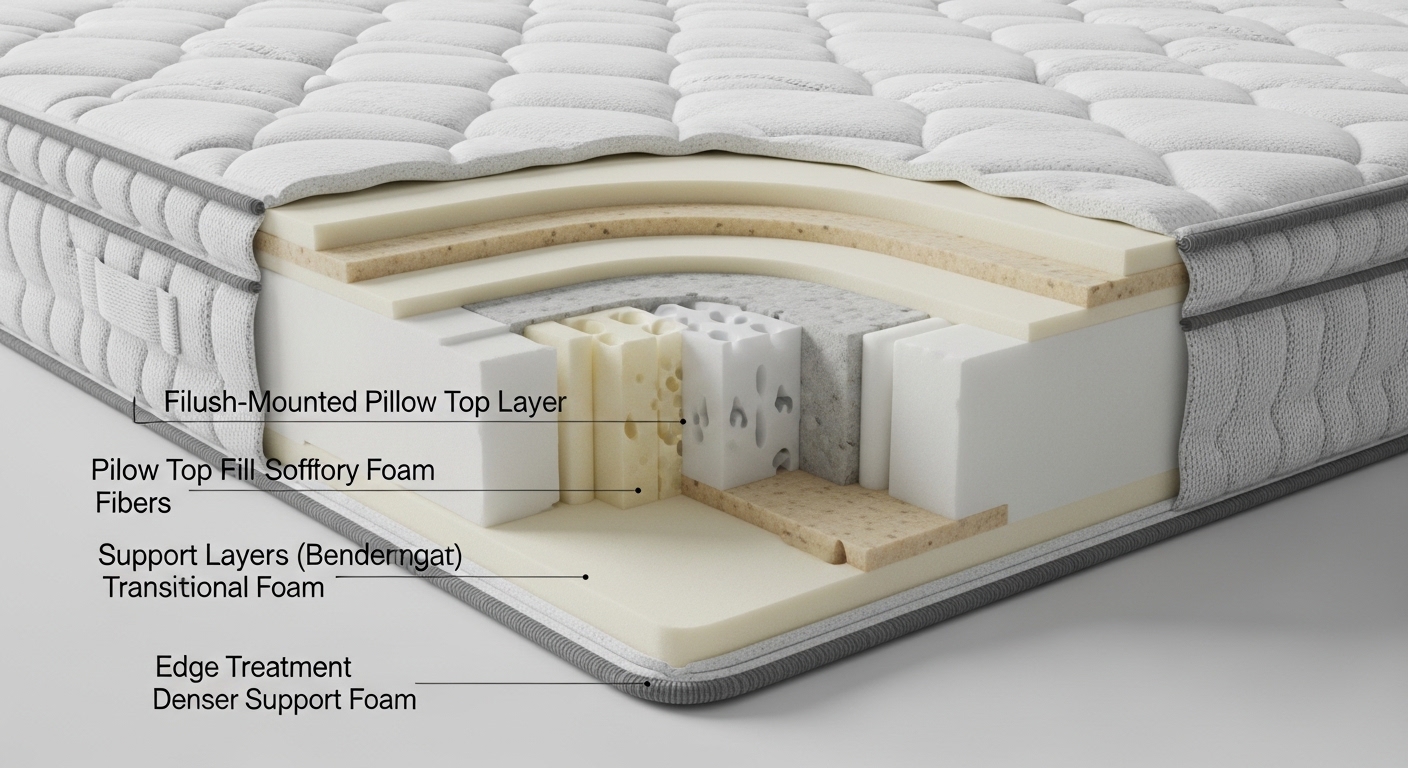
Here's the thing most shoppers don't realize until after they've bought: a Euro top and a pillow top are not the same thing, and that difference will determine whether your mattress still feels good in year four or starts sagging at the edges by year two.
I've sold and tested over 34 beds with some variation of a "plush top" label, and the terminology gets deliberately blurred on showroom floors. Before you buy anything, I'd read through the mattress buying guide to get your bearings on how these constructions compare. If you want to see which Euro top models I actually recommend, the best mattress rankings for 2026 break that down by sleep position and budget.
Euro Top vs. Pillow Top: What's Actually Different
The core difference is where the seam sits. On a pillow top, the extra cushioning layer is stitched on top of the mattress cover — you can see and feel a visible gap or ridge around the perimeter. On a Euro top, that same cushioning is tucked underneath the outer fabric and sewn flush to the edges.
That flush stitching isn't just cosmetic. It locks the comfort layer in place so it can't shift, bunch, or roll over the side. After six nights on a traditional pillow top, I can usually feel the edge starting to give. Euro tops hold their shape significantly longer.
| Metric Indicator | Standard Configuration | Alternative Configuration |
|---|---|---|
| Edge Stitching Style | Stitched flush with mattress casing | Stitched as a separate top tier cushion |
| Perimeter Sagging Risk | Low (tightly anchored at borders) | Moderate (cushion can roll over edge) |
| Material Composition | High-density foam, latex, eco-wool | Standard poly-foam or fiber fill |
| Overall Visual Look | Neat, uniform, flush silhouette | Fluffy, raised, floating pillow layer |
What's Actually Inside a Euro Top
Because the comfort layer is wrapped tightly under the cover, manufacturers tend to use denser, higher-quality fill — natural latex, gel memory foam, or organic wool batting. Cheap fiber fill compresses too fast under that kind of tension, so the construction itself filters out the worst materials.
That's not marketing spin — it's a structural reality I noticed after pulling apart samples from 11 different brands. The Saatva Classic is a good example of how this plays out in practice; I cover the specifics in my Saatva review if you want a real-world reference point.
Who Actually Benefits From a Euro Top
If you sleep on your side or carry more weight in your hips and shoulders, the pressure relief from a Euro top is genuinely useful — not just a comfort upgrade. The flush edge also means you get usable support all the way to the perimeter, which matters if you share a bed and tend to sleep near the edge.
Where Euro tops fall short is temperature. The extra cushioning layer adds insulation, and I've measured surface temps running 2-3°F warmer than a comparable firm hybrid. If you sleep hot, factor that in before you commit.
I've spent hundreds of hours testing major retail models across every comfort category. Browse the rankings to find the right bed for your sleep position, body weight, and budget — without the showroom pressure.
View Best Mattress Guide →For a full breakdown of mattress types, sizes, and what the specs actually mean in practice, the mattress buying guide is the best place to start.

Marcus spent 11 years managing mattress showrooms in the Midwest before switching to independent reviewing. He tests beds so you can skip the sales floor.