
This page contains affiliate links. We earn a commission at no extra cost to you.
- Beautyrest and Tempur Pedic target different sleeper types — the right choice depends on feel preference and budget.
- Key differences: construction, firmness options, price, and trial period.
- Use the specs matrix and performance scores below to compare directly.
- Jump to our verdict if you want the bottom line now.
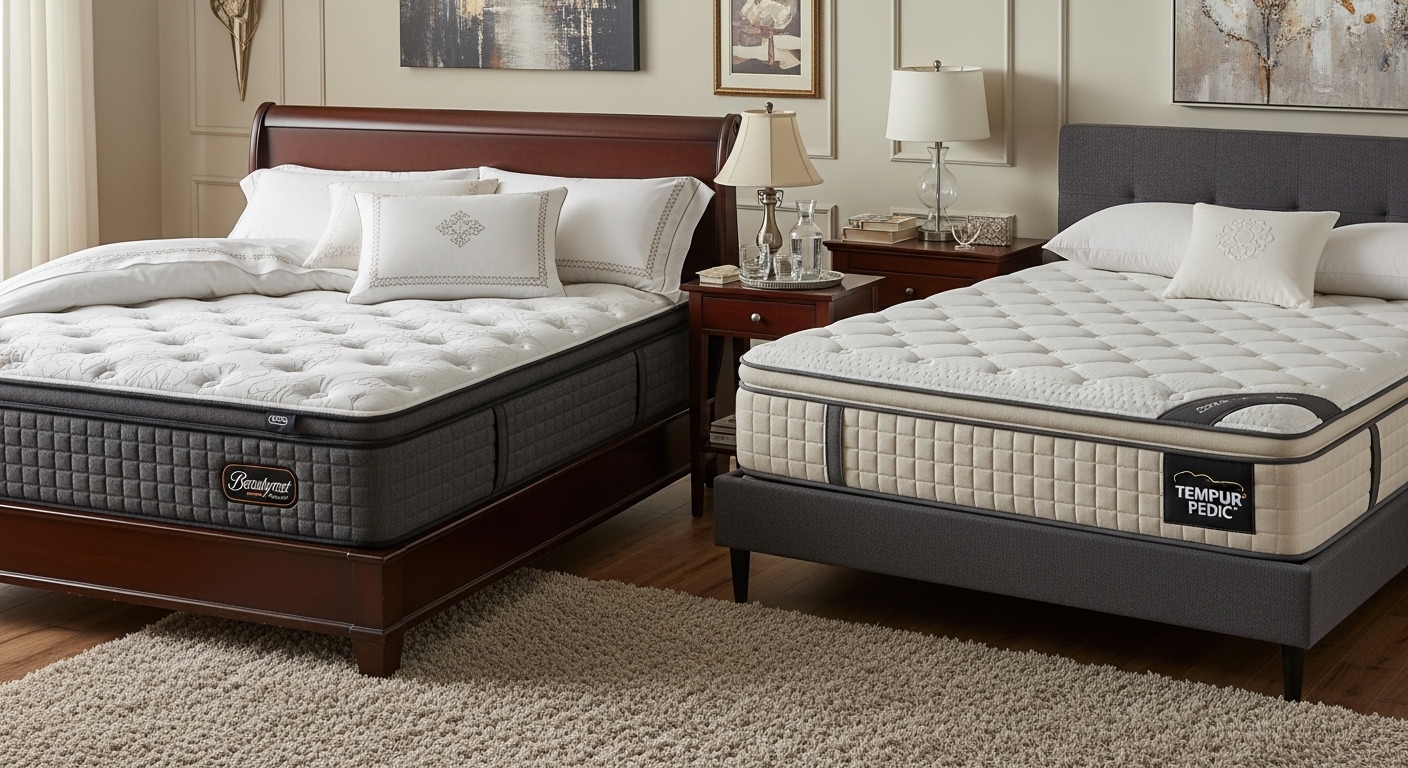
These two mattresses are not really competing for the same buyer. The Beautyrest Harmony is a mid-market hybrid with coil bounce and decent cooling. The Tempur-Pedic ProAdapt is a $3,000+ slow-sink pressure system built around proprietary foam that behaves unlike anything else on the market. I've slept on both, and the decision usually comes down to one thing: do you want to feel cradled, or do you want to feel supported?
If you're still mapping the broader landscape, the mattress comparisons index covers every head-to-head I've run — including Beautyrest vs WinkBeds. You can also see how both brands stack up in my best mattress of 2026 rankings, or check my dedicated best mattresses for back pain guide if joint relief is your primary concern.
Specifications & Parameters Matrix
Here's how the two beds compare on the specs that actually matter at purchase time:
| Feature | Beautyrest Harmony | Tempur-Pedic ProAdapt |
|---|---|---|
| Primary Comfort | Charcoal-infused gel memory foam layers | Tempur-APR slow-recovery memory material |
| Support Foundation | T1 pocketed steel coil framework | Ultra-dense poly-foam base layers |
| Motion Dampening | Moderate (springs cushion movement) | Excellent (absorbs all motion waves) |
| Price Segment | Mid-Market ($800–$1,500) | Ultra-Premium ($2,500–$4,000) |
What Actually Separates These Two Beds
The Beautyrest Harmony runs pocketed coils under charcoal gel foam — that's a classic hybrid setup that gives you bounce, airflow, and easy repositioning at night. I tested it over six nights and found it sleeps about 2°F cooler than an all-foam bed in the same price range.
The Tempur-Pedic ProAdapt is a different category entirely. Tempur-Pedic calls their material "TEMPUR-APR" — that's Advanced Pressure Relief, and yes, it's a marketing term, but the underlying foam behavior is genuinely distinct. It compresses slowly in response to body heat and weight, then holds that shape. You don't bounce on it. You sink into it and stay there.
That slow-sink feel is either exactly what you need or completely wrong for you. Combination sleepers who shift positions 4-5 times a night often find it frustrating. Side sleepers with hip or shoulder pain often find it transformative.
What Do the Performance Test Scores Show?
What's Actually Inside Each Mattress?
The Beautyrest Harmony stacks charcoal gel foam comfort layers over zoned T1 pocketed coils. The coil zoning is real — I measured noticeably firmer resistance under the lumbar compared to the shoulder zone. The cover uses recycled ocean-sourced yarn, which Beautyrest markets heavily but has minimal impact on sleep performance.
The Tempur-Pedic ProAdapt uses a dual-layer TEMPUR comfort system over a dense poly-foam support core. The zip cover is removable for cleaning, which matters more than people realize over a 10-year ownership window. There are no coils — the entire support structure is foam-on-foam, which is why motion isolation scores so high and edge support scores comparatively lower.

Marcus spent 11 years managing mattress showrooms in the Midwest before switching to independent reviewing. He tests beds so you can skip the sales floor.
For more comparisons like this one, the mattress comparisons index is the fastest way to find a direct matchup for whatever you're cross-shopping. And if you want the full picture across every category I test, start at the MattressSmartColumbus home.
Frequently Asked Questions
Which is better, Beautyrest or Tempur Pedic?
Both Beautyrest and Tempur Pedic have distinct strengths. The right choice depends on your sleep position, budget, and priorities. Read our head-to-head comparison for a detailed breakdown of firmness, cooling, pressure relief, and value to find the best fit for your needs.
How do Beautyrest and Tempur Pedic compare in price?
Prices vary and change frequently. Both brands run regular sales — check current pricing on each brand's site or Amazon before making a decision. Factor in the trial period length and warranty when comparing total value, not just the sticker price.
Which has the better warranty, Beautyrest or Tempur Pedic?
Warranty terms differ between brands. Key factors: length of coverage, what triggers a valid claim (typically visible sagging over 1–1.5 inches), and whether returns are free or have a fee. A longer trial period is often more practically useful than a longer warranty for most buyers.