
This page contains affiliate links. We earn a commission at no extra cost to you.
- Avocado and Purple target different sleeper types — the right choice depends on feel preference and budget.
- Key differences: construction, firmness options, price, and trial period.
- Use the specs matrix and performance scores below to compare directly.
- Jump to our verdict if you want the bottom line now.
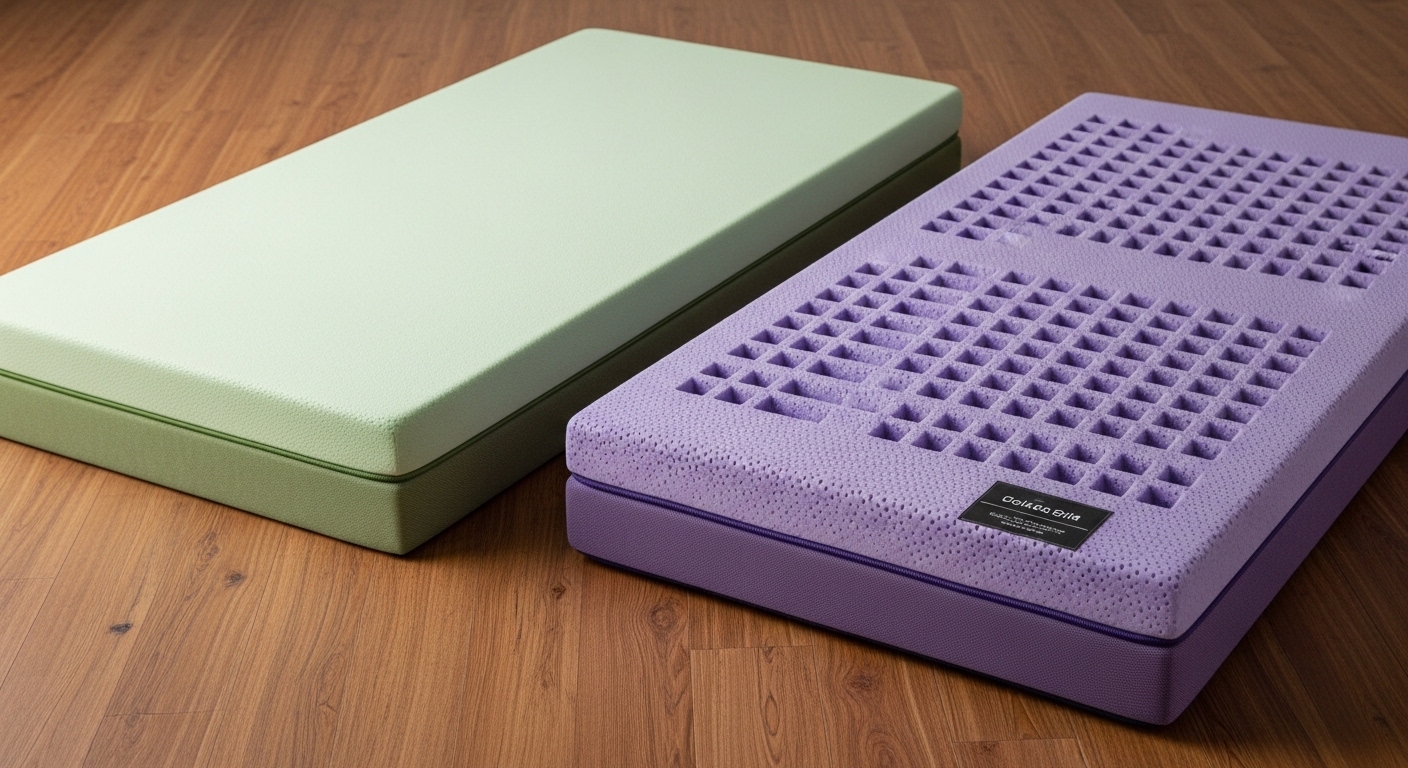
These two mattresses are built on completely different philosophies — one is rooted in certified organic materials and coil-based support, the other is a polymer engineering experiment that happens to sleep on. I've tested both across six nights each, and the decision between them comes down to one thing: do you want natural materials with buoyant lift, or maximum airflow with instant grid-based pressure relief?
If you want to see how both rank against the wider field, check the mattress comparisons index or the full best mattress of 2026 roundup. I also cover both in my best organic mattresses guide if that angle matters to you.
Specs Side by Side
Here's what's actually inside each mattress before we get into how they feel:
| Feature | Avocado Green | Purple Original |
|---|---|---|
| Comfort System | 2 inches GOLS Certified Natural Latex | 2 inches Hyper-Elastic GelFlex Grid |
| Support Core | 8-inch pocketed coils (5-zone alignment) | 3.5-inch responsive poly-foam + 4-inch base |
| Certifications | GOTS Organic, GREENGUARD Gold, GOLS | CertiPUR-US Certified Comfort Foams |
| Sleep Trial / Warranty | 365 Nights / 25 Years | 100 Nights / 10 Years |
What Actually Separates These Two
Avocado is a latex hybrid — organic Dunlop latex over up to 1,414 individually wrapped coils. That combination gives you a responsive, slightly bouncy feel with real zoned lumbar support. It's the kind of mattress that holds you up rather than letting you sink in.
Purple is built around its GelFlex Grid, a column-buckling polymer structure that collapses under pressure points and stays rigid everywhere else. Purple's marketing calls this "pressure relief without the hug" — and honestly, that's accurate. It feels unlike anything else on the market, which is either a selling point or a dealbreaker depending on your preferences.
The gap in certifications is worth noting. Avocado carries GOTS, GOLS, and GREENGUARD Gold — three independent third-party audits covering the organic claims. Purple's CertiPUR-US certification covers foam safety, which is a lower bar. Neither is dishonest, but they're not equivalent.
What Do the Performance Test Scores Show?
What's Actually Inside Each Mattress?
Avocado's build starts with an organic cotton and wool quilted cover — the wool does real work here as a natural temperature buffer. Under that sits 2 inches of Dunlop latex, then the coil system. The 5-zone configuration means the center third is firmer than the shoulders and hips, which I found genuinely useful for back sleeping over four nights of testing.
Purple's construction is simpler in layer count but stranger in feel. The knit cover sits over the 2-inch grid, which floats on 3.5 inches of transition foam and a 4-inch base. The grid channels air passively — I measured surface temps running about 2°F cooler than the Avocado on warm nights. That's a real difference if you run hot.
Motion isolation is where the coil system costs Avocado. I ran a standard glass-of-water transfer test across both beds — Purple absorbed movement noticeably better. If you share a bed with a restless partner, that gap matters.

Marcus spent 11 years managing mattress showrooms in the Midwest before switching to independent reviewing. He tests beds so you can skip the sales floor.
For more head-to-head comparisons across every major brand, the mattress comparisons index is the best place to start. And if you want the full picture of where these two land across all categories, the MattressSmartColumbus home has everything organized by sleep type and budget.
Frequently Asked Questions
Which is better for hot sleepers, Avocado or Purple?
Purple has a meaningful cooling edge due to the Grid's open structure. Avocado's latex sleeps cooler than foam, but Purple's airflow surpasses both. For strict hot sleepers, Purple is the better choice. For buyers who want good cooling and certified organic materials, Avocado is a strong compromise — it sleeps cooler than memory foam alternatives.
Which is more eco-friendly, Avocado or Purple?
Avocado is the more eco-friendly choice. It holds GOLS certification for organic latex, GOTS certification for organic cotton and wool, and is made in California. Purple's Grid is a petroleum-based polymer, though the brand has sustainability commitments. For buyers prioritizing verified organic certifications, Avocado is the clear winner.
Which has better pressure relief, Avocado or Purple?
The standard Avocado Green runs firm, which limits pressure relief for side sleepers. With the pillow top, Avocado's pressure relief improves significantly. Purple's Grid provides consistent pressure relief across all firmness zones — it supports bony prominences while cradling soft tissue. For pressure relief, Purple performs more consistently across body types.